
FPV Drones and the Role of Operator Training in Defense
Category
TrainingAuthor
Akbayrak Savunma Engineering TeamPublication Date
October 5, 2026Reading Time
8 min read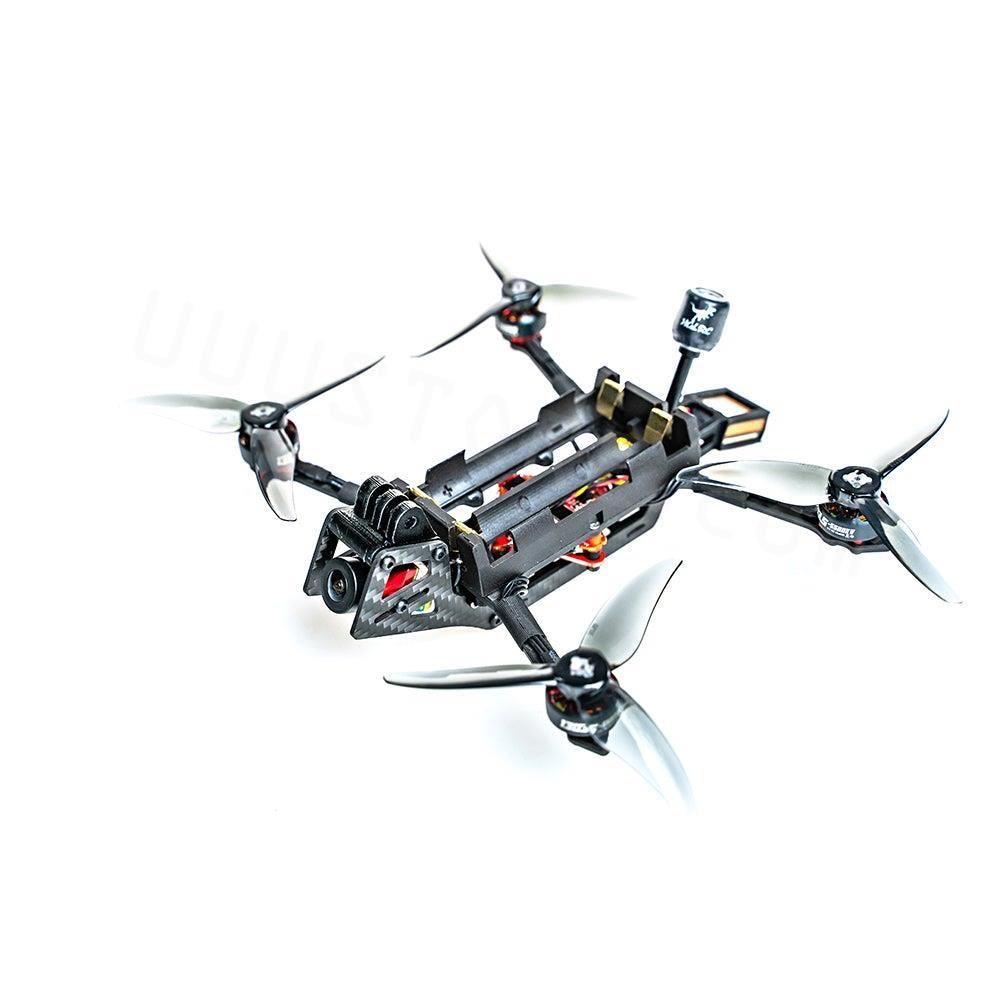
Introduction
FPV (first-person-view) drones, flown from a first-person perspective, have in recent years become one of the fastest-maturing assets in the defense domain. Their low cost, rapid producibility, and the way they give the operator a view as if seated inside the aircraft position these platforms as a compelling option for reconnaissance, surveillance, and precision missions. However, turning these capabilities into real value in the field depends as much on the competence of the operator flying the platform as on the platform itself. In this article, we examine what FPV drones are, their role in defense, and why structured operator training is decisive for both mission success and safety.
FPV Drones and Their Role in Modern Defense
To understand the place of FPV drones in defense, we must first consider the underlying logic of the technology and the operational advantages it delivers.
What Is FPV Drone Technology?
An FPV drone is a class of unmanned aerial vehicle in which the live feed from the onboard camera is transmitted in real time to the operator's goggles or screen, so that the pilot flies from the aircraft's own point of view. Unlike the traditional line-of-sight method of flying by external observation, the operator perceives the platform's movement and surroundings directly from the aircraft's perspective. This approach provides high maneuverability in confined spaces, agility at low altitude, and precise positioning at close range to the target. Combined with a lightweight airframe and modular camera and communication components, FPV drones form a flexible platform that can be adapted quickly to the mission profile.
Their Place in Defense Operations
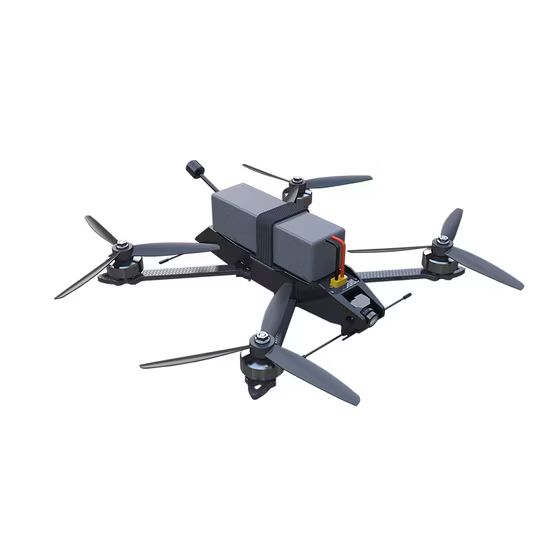
In defense operations, FPV drones stand out in missions such as close reconnaissance, target detection, damage assessment, and enhancing situational awareness under restricted visibility conditions. Because their low cost allows them to be used in high-risk-tolerance missions, they reduce the direct exposure of personnel to dangerous areas. At the same time, the agility of these aircraft demands a high degree of control precision; the consequences of a small error can appear within seconds. The advantage offered by FPV platforms therefore becomes reality only to the extent that the operator flying them can manage this precision.
A Phased Operator Training Roadmap
Operating an FPV drone requires a systematic learning process far more than intuitive talent. The roadmap below is built on a structure that gradually increases risk and reinforces competence at every step.
The Rationale for Structured Training
Unplanned and unsupervised flight attempts lead to outcomes such as equipment loss, safety breaches, and inconsistent performance. Structured training enables the operator to acquire core skills against measurable objectives, to recognize mistakes in a safe environment, and to prove readiness for advanced missions through objective criteria. Individual differences in ability are thereby reduced, and a predictable level of performance is established across the team.
Stage One: Simulator Training
The first step of the training process is the simulator environment, which carries no physical risk. Here the operator learns basic flight physics, control responses, and the aircraft's attitude control with the opportunity for unlimited repetition. Demanding maneuvers can be attempted without any concern about losing hardware, erroneous inputs can be observed together with their consequences, and muscle memory can be built safely. The simulator stage is an economical and safe step that guarantees the operator has acquired fundamental reflexes before going into the field.
Stage Two: Controlled Field Exercises
The operator who achieves proficiency in the simulator moves to a controlled field with defined boundaries and safety measures in place. At this stage, the effect of real wind, light, and distance conditions on behavior is experienced, and the skills learned in the simulator are transferred to the physical world. Under an instructor's supervision, the progression moves gradually from simple routes to more complex flight patterns. The controlled field builds the bridge between theory and real operations and puts the operator's confidence on a measurable footing.
Stage Three: Advanced Mission Scenarios
In the final stage, the operator encounters complex scenarios that mimic mission conditions. Elements such as time pressure, communication interruptions, changing targets, and unexpected obstacles are deliberately introduced into the process. These scenarios test not only the operator's flying skill but also speed of decision-making, composure under stress, and coordination with the team. Advanced training lets the operator experience, in a safe environment, the uncertainties that may arise in a real mission, bringing them to the highest possible state of readiness for the field.
Safety, Standardization, and Mission Success
The value of phased training reaches its highest level when combined with a strong safety culture and common standards.
Safety Culture and Standardization
Safety is not a single phase of training but an approach that extends to every phase of it. Pre-flight checklists, clear definitions of responsibility, and emergency procedures ensure that operators act within a shared framework of discipline. A standardized training curriculum, in turn, makes it possible for different operators to reach the same competence criteria and for their skills to be documented objectively. This standardization safeguards organizational continuity during team rotations and the rapid onboarding of new personnel.
How Training Reduces Risk and Contributes to Mission Success
A well-structured training process markedly reduces accident rates, equipment loss, and unforeseen errors that arise during a mission. An operator who has acquired skills in a safe environment makes more accurate decisions in the field, uses resources more efficiently, and responds more calmly to unexpected situations. Training thus becomes not merely a cost item but a strategic investment that directly increases mission success, operational safety, and the return on the platform investment. At Akbayrak Savunma, we treat FPV systems as an integrated whole together with the qualified operator training needed to use these systems effectively and safely.
Frequently Asked Questions
Let's Discuss Your Project
Your email address will not be published. Required fields are marked with *.